
Quick Summary
Envision your stomach behaving like a cranky toddler—cramps, bloating, diarrhoea, and constipation at the most inconvenient moments. For those who suffer from Irritable Bowel Syndrome (IBS), a prevalent gastrointestinal disorder that adds drama to digestion every day, it can be the way life feels. Think of an alternative to medication and doctor appointments: light stretching, deep breathing, peace and smiles. Of course, we’re talking about yoga! Findings emerged from a 2014 study that investigated the possibility that yoga could alleviate irritable bowel syndrome symptoms in adolescents and young adults. Let’s make the research findings digestible for you below.

What Was Studied
- The study type was a randomised controlled trial. It is a fair scientific test to see if yoga really works compared to doing nothing.
- Conducted by: Paediatric Pain Program, University of California, Los Angeles.
- What happened in the research study: 51 teenagers (14-17 years) and young adults (18-26 years) either diagnosed with irritable bowel syndrome (IBS) or suffering from chronic abdominal discomfort were included in the study. They were randomly split into two groups: the yoga group and the waitlisted control group. The yoga group underwent yoga classes twice a week, and home practice was encouraged, while the other group did not do yoga but was put on a waiting list and got to try it later.
Key Findings
For young adults: After two months of yoga practice, young adults, compared to a control group that did not practice yoga, showed greater progress in the following areas:
- IBS symptoms (less stomach pain, bloating, discomfort.)
- Health in general (overall, yoga group seemed to feel better)
- Disability (IBS was less of an obstacle to their daily lives)
- Stress and anxiety,
- Sleep quality, and
- Fatigue.
Apart from this, yoga helped reduce their worst belly pain, constipation, and nausea right after the programme, and all of the improvement except constipation lasted 2 months later as well. Also, 46% of young adults said that yoga helped them reduce their pain.
For Teenagers: They saw a substantial improvement in their:
- Physical functioning: they felt better and more capable physically
- 44% of them said their pain became better after doing yoga.
- They reported less nausea, constipation, and severe abdominal pain immediately following the programme, and they continued to feel better for at least two months afterward, with the exception of constipation.

What This Means for You
If you experience IBS symptoms or recurring abdominal discomfort, incorporating yoga into your weekly routine (even twice a week) could help alleviate pain, fatigue, and overall symptoms. If you try, you might be surprised by how much better you feel in your belly and your mind.
Key yoga postures for irritable bowel syndrome:
Reclining postures:
- Supta Baddha Konasana
- Supta Virasana
- Supta Padangusthasana
- Supta Swastikasana
Standing postures:
- Ardha Chandrasana with chair, or as needed
- Prasarita Padottanasana
Forward bends:
- Janu Sirsasana Inversions
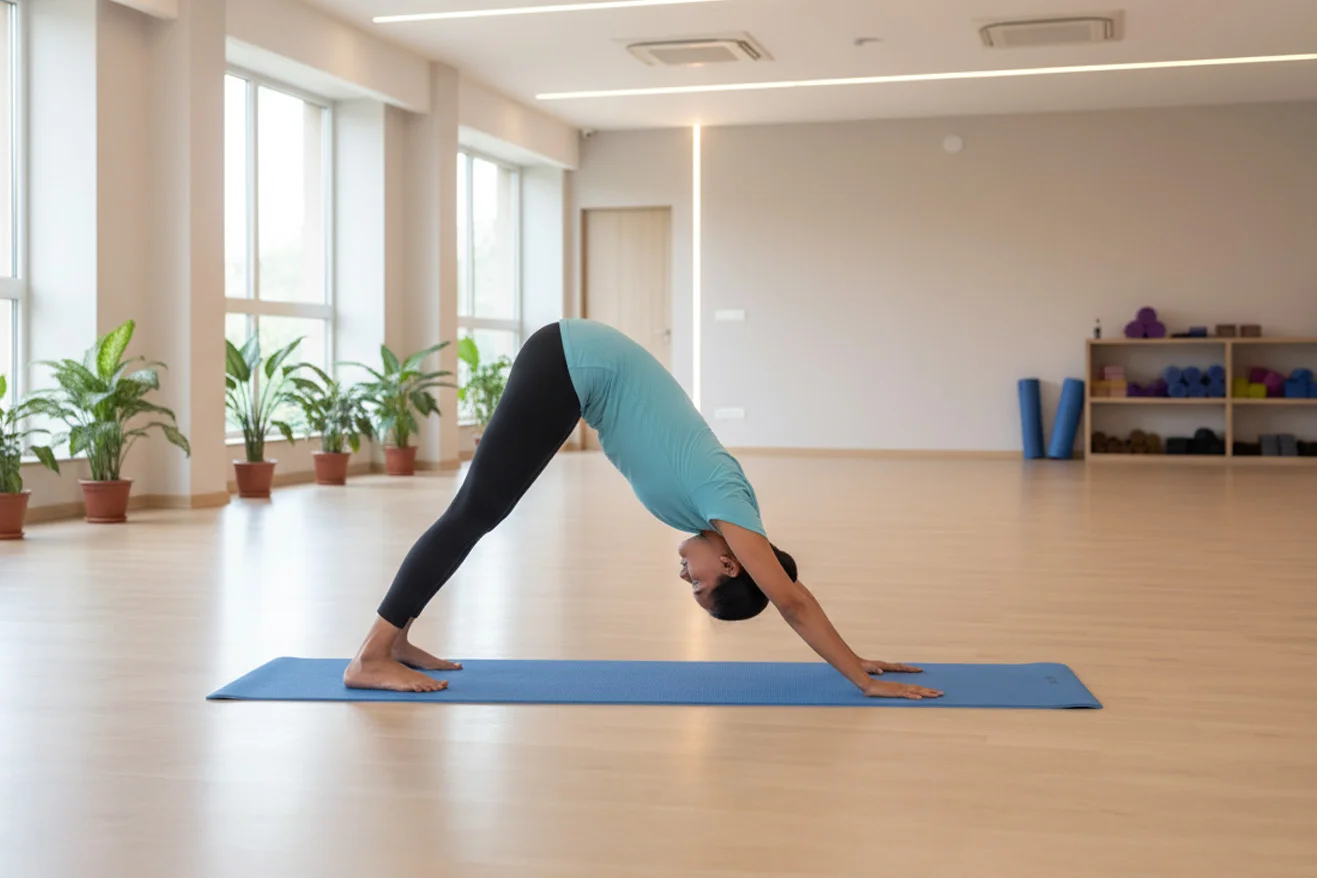
- Adhomukha Svanasana with ropes
- Salamba Sarvangasana and variations
- Rope Sirsasana
- Setubhanda Sarvangasana on cross bolsters
- Setubhanda Sarvangasana on bench
- Viparita Karani
- Handstand
- Pincha Mayurasana
- Chair Halsana
Backbends:
- Viparita Dandasana
- Purvottanasana on chairs
Seated postures:
Want to dive deeper? Check out the full study here:
Link: https://pmc.ncbi.nlm.nih.gov/articles/PMC4146428
Author Dilasha Sethi is a Phd scholar, accomplished writer, and Yoga practitioner with a profound focus on the intersection of ancient wisdom and modern wellness. Her writing aims to focus on researched facts needed to find clarity and strength in pursuing one’s own Yoga path.

